
Dream Dock has publicly denied using AI-generated game assets for DREADMOOR. The supplied research records that position in an April 2025 developer AMA and a developer-tagged Steam reply, with later coverage also reporting an explanation for the voice acting. The supported answer is that the developers say no; this research is not an independent audit of every asset.
Public statements, 2025–2026. Research checked November 9, 2026.
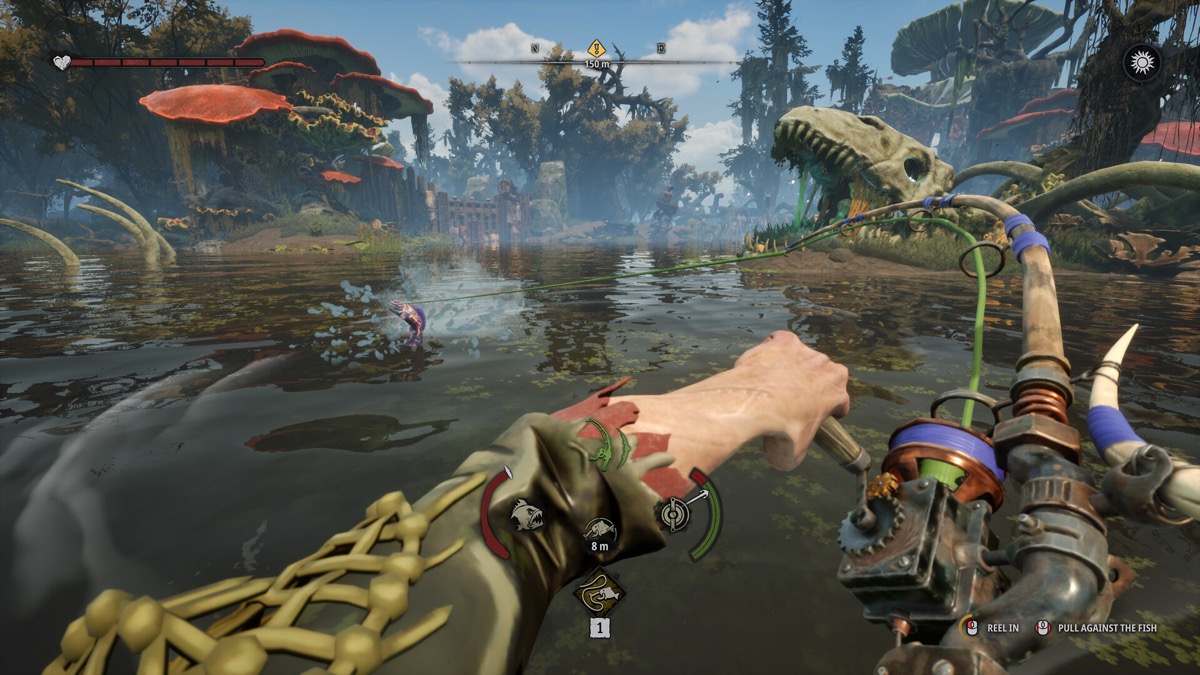
Official Steam screenshot · Dream Dock / Digital Vortex Entertainment. Illustrative media; material statement.
The direct answer and its evidence
The developer's statements are evidence of the team's public position on generative assets. They should be attributed to the team rather than rewritten as a claim that an outside investigator examined the entire production pipeline. That distinction preserves what the available sources actually establish.
The research identifies two primary places for the denial: the April AMA and the developer-tagged Steam discussion response. Their agreement supports reporting a consistent stated position across those appearances. It does not independently trace the provenance of every model, texture, performance or promotional image.
This is also different from a gameplay question about ordinary NPC behavior. Generative asset production and the conventional use of AI terminology for game systems describe different subjects. A discussion of one should not be presented as an answer about the other merely because both contain the word AI.
April 2025 developer statements
The supplied notes describe Dream Dock's April AMA as denying AI-generated objects and discussing original modelling work. The developer-tagged Steam response dated April 19 also denies that the project is AI work. These are the dated statements on which the article's direct attribution rests.
The date matters because launch discussions can combine older trailer criticism with later demo impressions. A response made during the announcement period should not be mistaken for a new statement issued in reaction to every later comment. Keep each appearance attached to its own context when comparing the team's position over time.
The collected secondary announcement coverage also reports the denial alongside early criticism. That coverage supplies context about the discussion without converting the criticism itself into proof of generative assets. An allegation and the existence of a response are different facts from an independent verification of the underlying claim.
The later voice-acting discussion
October demo coverage reported concerns about the sound of the performances and a human-recording and post-processing explanation. That is a reported explanation, not an audio-forensics result produced by this site. The research does not include a verified audit of the recording sessions or all processing applied to every line.
A voice sounding unusual is not sufficient evidence that it was generated. The source notes explicitly distinguish subjective reaction from a supported production claim. This page therefore does not diagnose the technology behind an individual performance based on a listener's impression alone.
The report about voice acting also should not be broadened into an inventory of every production tool used by the studio. The supplied material addresses a particular public concern and its reported answer. It does not establish a complete list of software, contractors or workflow steps for the whole project.
What the video records can and cannot establish
The supplied research records critical commentary videos as discovery candidates. Their titles express a viewpoint or comparison, but that is not evidence that a particular asset was generated. Observed view counts similarly describe attention rather than the truth of the production claim.
Usable English transcripts were not obtained for those candidates in the recorded research. No dialogue, timestamp or alleged admission is therefore extracted from them for this article. Treating a title as if it contained a verified statement inside the video would go beyond the material actually collected.
The same care applies to promotional footage. A trailer can show the public presentation that prompted discussion, but visual suspicion alone does not trace how each item was made. This article uses attributable statements instead of presenting an aesthetic reaction as a completed asset investigation.
Keep this wiki separate from the game's production
DREADMOOR Wiki is an independent fan site, not the developer or publisher. Its own original favicon is a fan-site emblem and is not the official game logo. The method used to create material for this website is not evidence about how Dream Dock produced the game.
Official screenshots used here are credited to Dream Dock and Digital Vortex Entertainment. Their role is illustrative game imagery, not proof of an audited asset pipeline. For the game identity and official storefront, see the Steam guide.
How to read the conclusion responsibly
The evidence supports an attributed denial, dated to the primary public statements in the research. It does not support asserting that allegations are proved, or that every asset has been independently certified as non-generative. A missing disclosure label and a hostile or favorable comment are not substitutes for provenance evidence.
The source notes also exclude a similarly named itch.io game as a different product. Match the developer, publisher and Steam app when comparing claims so that material about another game is not imported into this discussion. The release-date page and demo page provide the relevant timeline for this specific DREADMOOR.
Sources and research scope
This article synthesizes the supplied research document dated November 9, 2026. Demo instructions are attributed to the recorded builds; no hands-on Early Access playthrough is claimed.
Found a build-specific difference? Send a correction with the objective wording and game version.